Hummus with Warm Bread
Hummus with Warm Bread is a delightful dish that brings together the creamy texture of homemade hummus and the comforting warmth of freshly baked pita. This recipe is not only easy to prepare but also packed with flavor and nutrients, making it a healthy choice for any occasion. Originating from the Middle East, hummus has gained popularity worldwide for its versatility and delicious taste. Enjoy it as an appetizer, a snack, or even a light meal on its own, and savor the combination of flavors that make this dish truly special.

Why This Hummus with Warm Bread Works
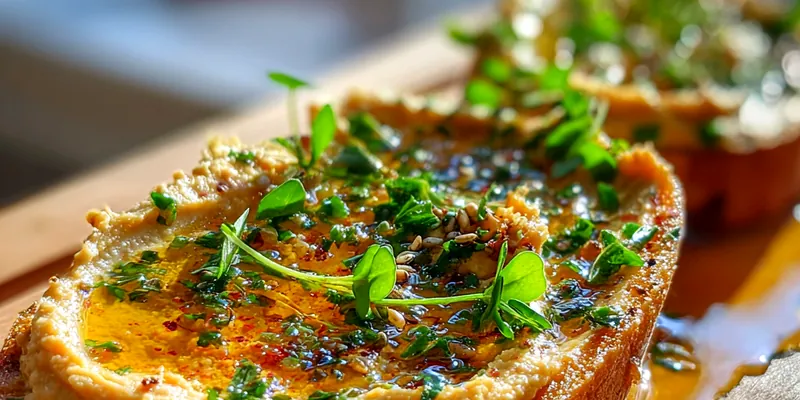
The technique of blending chickpeas with tahini and spices creates a smooth and creamy hummus that is both delicious and nutritious. Using high-quality ingredients, such as fresh garlic and lemon juice, enhances the flavor and gives the hummus brightness. The addition of olive oil not only adds richness but also aids in achieving the perfect consistency. The warm pita bread complements the hummus, providing a delightful contrast in texture and temperature.
What makes this hummus special is its versatility. You can easily customize it with your favorite spices and toppings, making it suitable for various palates. Additionally, serving it warm with freshly baked pita enhances the overall experience, turning a simple dip into a delightful dish. This combination is not only satisfying but also offers a well-balanced meal option packed with protein and fiber, perfect for any time of the day.
💡 Professional Tip
For the creamiest hummus, blend your chickpeas for longer than you think is necessary. If you prefer a thinner consistency, add water gradually until you reach your desired texture. Also, consider using dried chickpeas that you soak and cook for an even richer flavor. Lastly, don't skimp on the olive oil—it really makes a difference in the taste and texture of your hummus.
Frequently Asked Questions
Yes, you can prepare the hummus in advance and store it in an airtight container in the refrigerator for up to five days. Just remember to bring it back to room temperature before serving for the best flavor. The pita bread, however, is best served warm, so it's advisable to warm it just before serving. This way, you can enjoy the perfect texture and taste.
If you're looking for alternatives, you can use white beans such as cannellini or navy beans instead of chickpeas for a different flavor profile. For the tahini, sunflower seed butter or Greek yogurt can serve as substitutes, though they will alter the taste slightly. Additionally, you can replace the pita bread with crackers or vegetable sticks for a gluten-free option. Experimenting with these variations can lead to delicious results.
You'll know your hummus is done when it reaches a smooth and creamy consistency without any graininess. Taste it to ensure the flavors are balanced, adjusting the seasoning as necessary. The pita bread should be warm and slightly toasted, making it easy to tear and dip. When everything looks and smells delicious, it’s time to serve!
Yes, you can freeze hummus for up to three months. To freeze, place it in an airtight container, leaving some space at the top as it may expand. When you're ready to enjoy it, thaw it overnight in the refrigerator and stir well before serving. Keep in mind that the texture may change slightly after freezing, but it will still be flavorful.
In addition to warm pita, consider serving fresh vegetables like cucumber sticks, carrot slices, or bell pepper strips for dipping. You can also pair it with olives, feta cheese, or a simple salad for a more complete meal. Hummus can also be a great spread on sandwiches or wraps, adding a creamy texture and flavor. The possibilities are endless!
Hummus can be stored in the refrigerator for up to five days in an airtight container. If stored properly, the flavors may develop further, making it even tastier. However, warm pita bread is best consumed immediately after preparation. Leftover pita can be stored in a paper bag at room temperature but is best when warmed just before serving.
To adjust the spice level of your hummus, you can add more or less garlic according to your preference. For a kick, consider adding a pinch of cayenne pepper or red pepper flakes. If you prefer it milder, reduce the amount of cumin and garlic. Always taste as you go to achieve the desired balance for your palate.
To reheat pita bread, wrap it in aluminum foil and place it in a preheated oven at 350°F (175°C) for about 5-10 minutes. Alternatively, you can microwave it for 20-30 seconds, but keep an eye on it to avoid making it too chewy. When reheating hummus, place it in the microwave for a short burst of 30 seconds, stirring in between until warmed through. This helps retain its creamy texture.
Recipe Troubleshooting Guide
Too Dry
Problem: If your hummus turns out too dry, it might be due to insufficient liquid or blending time.
Solution: To fix this, simply add a tablespoon of water or olive oil at a time while blending until you reach your desired consistency. You can also add a little more lemon juice for an extra zing while softening the texture.
Not Crispy
Problem: If your pita doesn't turn out crispy, it may not have been baked long enough or at a high enough temperature.
Solution: To achieve a crispy texture, ensure your oven is properly preheated and consider using a higher temperature. You can also brush the pita with olive oil before baking to enhance crispiness further.
Overcooked
Problem: If the hummus is overcooked, it may have a grainy texture and lack flavor.
Prevention: To prevent this, focus on blending until just smooth and stop blending as soon as you reach the desired consistency. If it happens, try adding a bit of fresh lemon juice or olive oil to revive the flavor.
Undercooked
Problem: If your hummus feels undercooked, it might be due to not blending enough or insufficiently cooked chickpeas.
Recovery: Ensure you're using properly cooked chickpeas, whether canned or soaked and boiled until tender. Blend the hummus longer if needed to achieve that smooth texture.
Burnt
Problem: If your pita bread is burnt, it may have been baked too long or at too high of a temperature.
Prevention: To avoid burning, keep an eye on the pita while it's in the oven and check for doneness around the 5-minute mark. You can also lower the temperature slightly and extend the baking time for a more controlled cooking process.
Flavor Balance
Too Sweet: If your hummus tastes too sweet, it may have too much lemon juice or tahini.
Too Salty: A salty taste can result from too much salt or using canned chickpeas without rinsing. You can adjust by adding more tahini or chickpeas.
Bland: If the hummus is bland, it likely needs more seasoning. Adding extra garlic, lemon, or spices can help elevate the flavor profile.
Key Ingredients
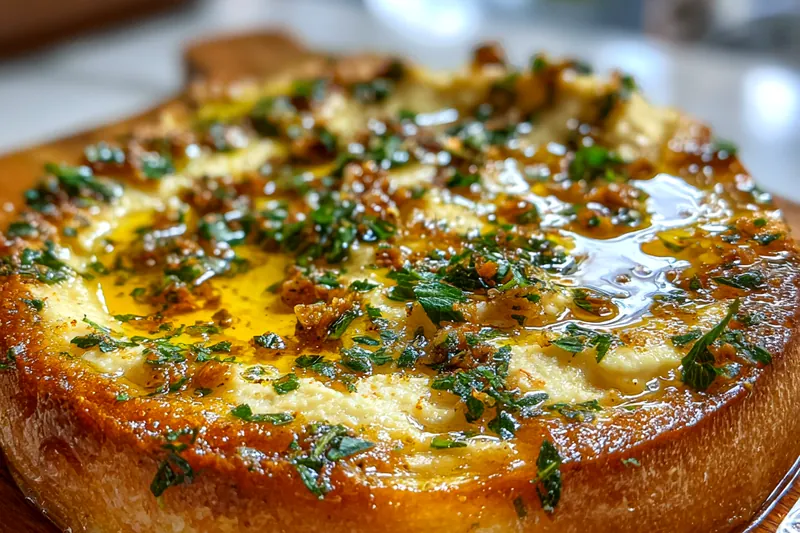
The main ingredient in this hummus is chickpeas, which are not only flavorful but also rich in protein and fiber. They form the base of the dish and provide a creamy texture when blended. Tahini, made from ground sesame seeds, adds a nutty flavor and creaminess that elevates the dish. Fresh garlic and lemon juice contribute brightness and depth, making the hummus flavorful and refreshing.
Seasonings like ground cumin and salt bring out the natural flavors, enhancing the overall taste of the hummus. Olive oil adds richness and smoothness, resulting in a luxurious mouthfeel. For the warming bread, pita is the classic choice, and it pairs perfectly with hummus. You can also experiment with different seasonings, such as za'atar or paprika, to add a unique twist.
Essential Ingredient Notes
- Main Ingredient: Chickpeas are the star of the show in this recipe. Rich in protein, they offer a creamy texture that makes hummus satisfying. Whether you use canned or dried chickpeas, ensure they are well-cooked for the best results. Their mild flavor allows them to take on the spices and seasonings beautifully.
- Second Key Ingredient: Tahini is essential for authentic hummus. Made from ground sesame seeds, it adds creaminess and a unique nutty flavor. While selecting tahini, look for a high-quality product that is smooth and fresh. If you don't have tahini, you can substitute it with other nut butters, but the taste will vary.
- Essential Seasoning: Olive oil is a must for this dish. It not only enhances the flavor but also contributes to the smooth, creamy texture of the hummus. Use high-quality extra virgin olive oil for the best results, as it adds richness and depth. A drizzle on top before serving adds a beautiful finishing touch.
Cooking Process
To start, gather all your ingredients and ensure your chickpeas are ready for blending. Drain and rinse the canned chickpeas, and prepare your other ingredients like tahini, garlic, and lemon juice. Preheat your oven while you blend the hummus to ensure everything is warm and ready to serve. The blending process is crucial—blend until you achieve a smooth and creamy consistency, adjusting the liquid as necessary.
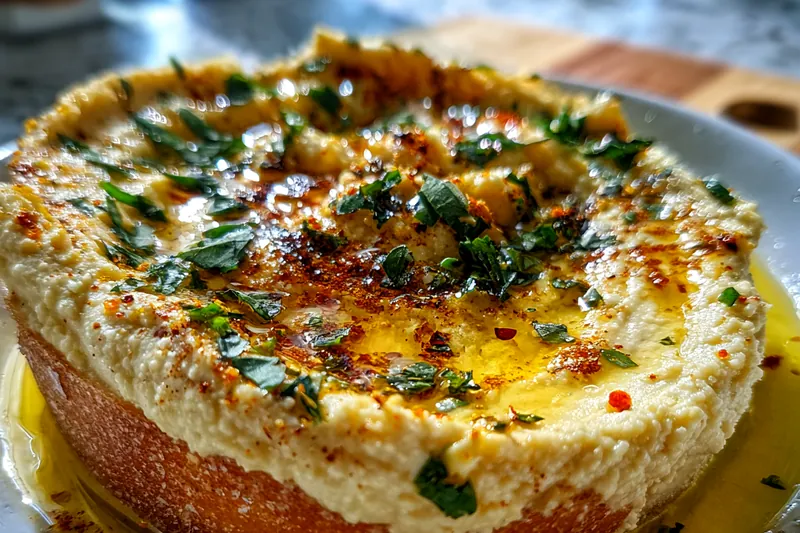
Once your hummus is perfect, transfer it to a serving dish and garnish it to your liking. While the hummus is resting, warm your pita bread in the oven. The combination of warm bread and creamy hummus creates a delightful experience. When everything is ready, serve immediately for the best flavor and texture.
Key Technique
The key to perfect hummus lies in the blending process. Blending for a longer time can achieve an ultra-smooth texture that is often desired in restaurant-style hummus. Make sure to scrape down the sides of the processor to incorporate all ingredients fully. Additionally, adjusting the water and olive oil during blending helps achieve the desired consistency without compromising flavor.
Hummus with Warm Bread
📋 Ingredients
Main Ingredients
- Salt, to tasteAdjust according to preference
- 1/2 teaspoon ground cuminAdds warmth and depth
Sauce/Seasoning
- 1 can (15 oz) chickpeas, drained and rinsedBase ingredient for hummus
- 1/4 cup tahiniNutty flavor and creaminess
- 3 tablespoons olive oilFor richness and smoothness
- 2 tablespoons lemon juiceAdds brightness
- 2 cloves garlic, mincedFor flavor
- Water, as neededTo achieve desired consistency
Instructions
Prepare the Chickpeas
Start by draining and rinsing the chickpeas to remove excess sodium. For a creamier hummus, you can remove the skins, but this is optional. Place the chickpeas in a food processor.
Blend the Hummus
Add tahini, garlic, lemon juice, olive oil, ground cumin, and salt to the food processor with the chickpeas. Blend until smooth, adding water as necessary to achieve your desired consistency. Taste and adjust seasoning as needed.
Warm the Pita Bread
While the hummus is blending, preheat your oven to 350°F (175°C). Place the pita bread on a baking sheet and warm in the oven for about 10 minutes, or until slightly toasted and warm.
Garnish the Hummus
Once the hummus is blended, transfer it to a serving bowl. Drizzle additional olive oil on top and sprinkle with paprika and fresh parsley for garnish. You can also add za'atar seasoning for an extra flavor boost.
Serve Warm
Remove the warm pita from the oven and cut into triangles. Serve the hummus with warm pita bread alongside for dipping. This dish is perfect as an appetizer or a light meal.
Recipe Notes & Tips
Storage Tips
To store leftover hummus, transfer it to an airtight container and refrigerate. It can last up to five days. If you have extra pita, wrap it in a paper towel and keep it at room temperature for a day or two. Reheat the pita before serving to enjoy its best texture.
Serving Ideas
Serve hummus with a variety of dippers such as fresh vegetables, pita chips, or crackers. It also pairs well with olives and cheese for a Mediterranean platter. Use it as a spread on sandwiches or wraps for a flavorful twist.
Variations
Feel free to experiment with different flavor variations! You can add roasted red peppers, sun-dried tomatoes, or even spices like smoked paprika or harissa for a kick. Each twist can create a unique hummus experience tailored to your taste.